 Новостная лента
  Блог
Блог  Исследовать
  Мероприятия
  Форум
Форум  работы
  Network

What Is Transcript Syncing?
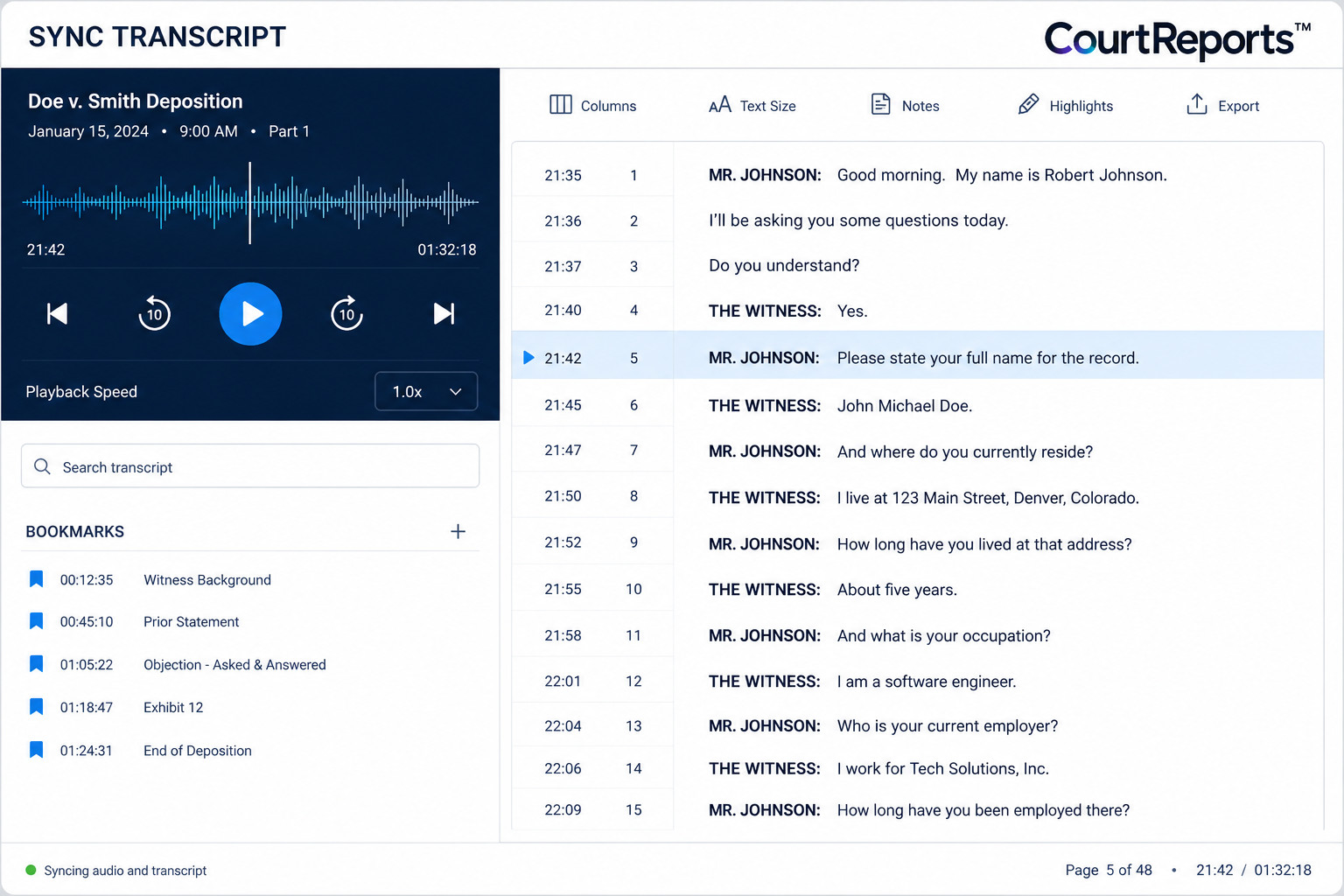
Transcript syncing (also known as video-text synchronization) is the process of aligning a deposition video with its certified transcript word-for-word and timestamp-for-timestamp. The result is a side-by-side playback where the spoken word in the video matches the text in real time.
These synced files are typically delivered in formats like MPEG with captions, LEF, PTX, or Synchronized Text Files viewable in litigation software like TrialDirector, OnCue, DepoView, or LiveNote.
Why Attorneys Need Transcript Syncing
1. Rapid Review of Video Testimony
Syncing allows attorneys to:
-
Jump to any line in the transcript and instantly see the corresponding video.
-
Search and highlight keywords or key admissions, and view them spoken.
-
Review faster without scrubbing through hours of raw video.
When prepping for trial, you don't have time to scroll through depositions. Syncing lets you find, verify, and watch exact segments of witness testimony.
2. Powerful Impeachment at Trial
A synced deposition lets you:
-
Play back exact quotes with video + audio + transcript.
-
Show the jury how a witness’s earlier statement contradicts live testimony.
-
Deliver that "gotcha" moment without fumbling through papers or pausing court to queue a clip.
This combination of body language, tone, and verbatim language is often far more persuasive than reading a quote aloud.
3. Better Organization of Evidence
Transcript syncing makes it easy to:
-
Bookmark key testimony
-
Annotate by issue (e.g., causation, damages)
-
Export excerpts for experts or co-counsel
-
Share clips with clients or adjusters
It’s a game-changer for collaborative trial prep.
4. Essential for Mediation and Settlement
Playing short synced clips in mediation is far more impactful than showing a transcript. It adds emotion, credibility, and context — often helping opposing counsel see the risk of going to trial.
Even outside court, synced depositions can strengthen your negotiation position.
5. Improved Memory & Retention
Legal teams retain more information when watching synced video rather than reading alone. Visual reinforcement helps attorneys and clients better understand tone, demeanor, and emphasis — all critical to evaluating a witness's credibility.
Who Benefits Most?
Transcript syncing is a must-have in cases involving:
-
Personal injury or catastrophic loss
-
Employment law (harassment, retaliation)
-
Medical malpractice or expert-heavy litigation
-
Class actions with multiple deponents
-
High-stakes commercial disputes
What Happens Without Syncing?
Without syncing:
-
You waste time jumping between video and transcript.
-
You risk misquoting or misrepresenting a witness’s tone.
-
You lose the emotional weight of body language and voice in front of a jury.
-
Your trial prep becomes slower, harder, and more error-prone.